Crop Disease Detection via WhatsApp AI Bot: 2026 Guide

🎥 Watch the Official Channel Trailer
See how Top AI Africa deploys production AI agents in 72 hours across the continent.
Your Phone Can Now Be Your Plant Doctor
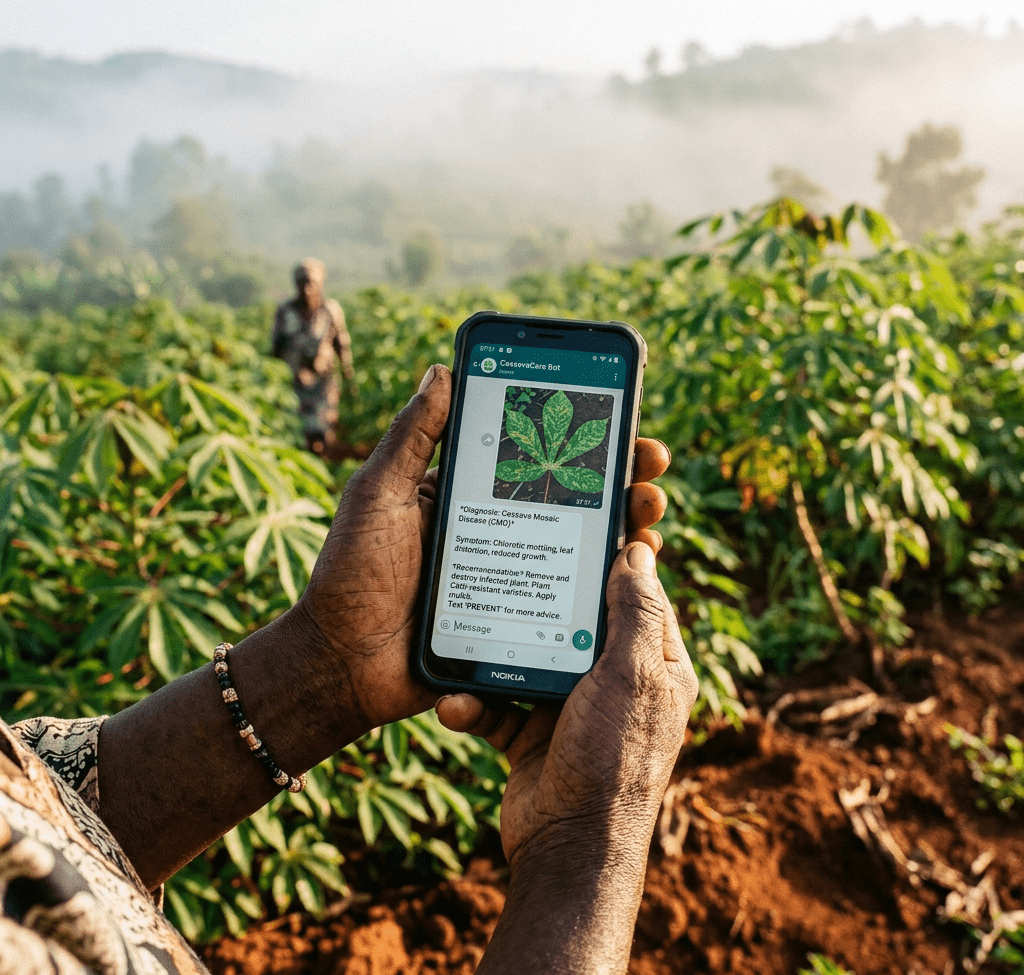
Crop disease detection using WhatsApp AI bots is changing how African farmers protect their harvests. In 2026, smallholder farmers across East Africa can photograph a diseased leaf, send it via WhatsApp, and receive an AI-powered diagnosis in under 30 seconds. This step-by-step guide shows you exactly how to use these free WhatsApp AI bots for crop disease detection — from taking the right photo to acting on the diagnosis.
You notice something wrong with your cassava leaves. They are curling. Yellow spots are spreading. Last season, this same problem destroyed half your harvest before anyone could tell you what it was. This season is different. You open WhatsApp, take a photo, send it, and within 30 seconds you have an answer.
What Is a WhatsApp AI Bot for Crop Diagnosis?
A WhatsApp AI bot is an automated system that uses artificial intelligence to analyze photos of crops and identify diseases. You interact with it exactly like you would chat with a friend on WhatsApp — except this friend is an AI trained on thousands of images of crop diseases.
How the Technology Works
- You send a photo of a sick plant to the bot’s WhatsApp number
- The AI model analyzes the image — looking at leaf color, spot patterns, shape distortion, and texture
- The model compares what it sees against a database of thousands of disease images
- It returns a diagnosis with a confidence score (e.g., “92% likely Cassava Brown Streak Disease”)
- It provides treatment recommendations and prevention advice
The entire process takes 10-60 seconds depending on your network speed.
What Diseases Can Be Detected?
Cassava: Cassava Mosaic Disease (CMD), Cassava Brown Streak Disease (CBSD), Cassava Bacterial Blight, Cassava Green Mite damage
Maize: Maize Lethal Necrosis (MLN), Gray Leaf Spot, Northern Leaf Blight, Fall Armyworm damage
Beans: Angular Leaf Spot, Bean Common Mosaic Virus, Anthracnose
Potato: Late Blight, Early Blight, Bacterial Wilt
Banana: Banana Xanthomonas Wilt (BXW), Black Sigatoka, Banana Bunchy Top Virus
Step-by-Step: Using a WhatsApp AI Bot
Step 1: Save the Bot Number
Save the WhatsApp number of the agricultural AI bot to your phone contacts. Different services operate in different countries. Your local agricultural cooperative or extension office can provide the number. Send “Hi” or “Start” to begin.
Step 2: Select Your Crop
The bot will ask which crop you need help with. You can type the crop name (e.g., “cassava” or “manioc”), select from a numbered menu, or send a voice note saying the crop name.
Step 3: Take a Clear Photo
This is the most important step. The quality of the diagnosis depends on the quality of your photo.
- Get close: Fill the frame with the affected leaf or plant part
- Use natural light: Take the photo during the day, not in shadow or harsh sunlight. Overcast days give the best results
- Show the damage clearly: Focus on the spots, discoloration, curling, or holes
- Hold steady: Blurry photos give poor results. Rest your hand on something solid
- Include a healthy leaf for comparison: Hold a healthy leaf next to the sick one if possible
- Avoid wet leaves: Water droplets can confuse the AI
Step 4: Send the Photo
Send the photo directly in the WhatsApp chat. Do not send it as a document — send it as a regular photo so the bot can analyze the image. Wait 10-60 seconds for the response.
Step 5: Read the Diagnosis
The bot will respond with the disease name, confidence level, description, recommended treatment, prevention tips, and severity assessment. Here is an example:
Diagnosis: Cassava Mosaic Disease (CMD)
Confidence: 92%This is caused by a virus spread by whiteflies. The yellow mosaic pattern on the leaves is characteristic.
Immediate action: Remove and burn severely infected plants. Do not use cuttings from infected plants for next season.
Prevention: Plant CMD-resistant varieties (available from ISABU). Control whitefly populations. Use clean planting material.
Severity: Moderate. If less than 30% of your field is affected, removing infected plants can save the rest.
Step 6: Take Action
Follow the bot’s recommendations immediately. For many crop diseases, timing is critical. A disease caught in week 1 might cost you 5% of your harvest. The same disease left until week 4 could cost you 50%.
Step 7: Follow Up
Most bots allow you to send additional photos if the problem continues, ask follow-up questions, and report back on results. This feedback also helps improve the AI model for future users.
Tips for Getting the Best Results
When the AI is confident (above 85%): The diagnosis is generally reliable. Follow the treatment recommendations.
When the AI is uncertain (below 70%): Take additional photos from different angles. Include photos of the whole plant. Contact your local extension worker with the bot’s preliminary diagnosis.
What the AI Cannot Do
- It cannot diagnose nutrient deficiencies as accurately as diseases
- It cannot detect soil-borne diseases from leaf photos alone
- It struggles with multiple simultaneous diseases on the same plant
- New or rare diseases not in the training data will not be identified correctly
- Poor photos (blurry, dark, too far away) give unreliable results
Real Farmer Stories
Marie, Cassava Farmer, Kayanza Province, Burundi: “I lost almost everything to CBSD two years ago. Nobody could tell me what was wrong until it was too late. Now I check my plants every week with the WhatsApp bot. Last month it caught CMD early on three plants. I pulled them out immediately. The rest of my field is healthy.”
Joseph, Maize Farmer, Arusha Region, Tanzania: “The extension worker visits once every few months. The WhatsApp bot is available every day. I showed my neighbor how to use it and now our whole group uses it.”
Grace, Bean Farmer, Western Province, Rwanda: “I cannot read well, so I use the voice note feature to ask questions. The bot sends me voice replies in Kinyarwanda. It told me my beans had angular leaf spot and I needed to improve air circulation by spacing plants wider. This season my bean yield was the best in five years.”
Cost and Accessibility
- Price: Free in most cases. Standard WhatsApp data charges apply (approximately 1-5 MB per session)
- Phone requirements: Any smartphone that runs WhatsApp (Android 5.0+ or equivalent)
- Language support: English, French, Swahili, Kirundi, Kinyarwanda (varies by service)
- Internet required: Yes, but only a small amount of data per diagnosis
For a broader look at AI agriculture tools, see our guide to the best AI tools for African farmers. Learn more about AI transforming Burundi agriculture or explore comparing AI and traditional approaches.
Check Your Crops This Week
The technology exists. It is free. It takes less than a minute. And it could save your harvest.
If you are a farmer with a smartphone, try a WhatsApp AI bot this week. Take a photo of any leaf that looks abnormal. Send it. Read the response. Share the number with your farming group.
Want to deploy AI-powered WhatsApp agricultural bots for your organization? Contact Top AI Africa to build custom AI automation solutions that work in local languages and on basic devices.
🎥 New: Top AI Africa YouTube Channel
AI agent tutorials, case studies, and live deployment demos in English and French. Subscribe for new content every week.
Frequently Asked Questions
Do WhatsApp AI bots for crop disease diagnosis work without Wi-Fi?
They require a mobile data connection to send photos and receive responses, but the data usage is minimal (1-5 MB per session). They do not require Wi-Fi specifically — any mobile internet connection works.
How accurate are WhatsApp AI crop disease diagnoses?
For diseases the AI has been extensively trained on (cassava, maize, and bean diseases common in East Africa), accuracy ranges from 85-95%. Accuracy is lower for rare diseases or poor-quality photos. Always confirm critical diagnoses with an extension worker.
Can I send voice notes instead of typing to the WhatsApp AI bot?
Many agricultural WhatsApp bots now support voice notes in local languages including Swahili, Kirundi, and Kinyarwanda. This is particularly useful for farmers with limited literacy.
What should I do if the AI bot gives a low confidence diagnosis?
Take additional photos from different angles and in better lighting. Include both healthy and diseased leaves. If confidence remains below 70%, contact your local agricultural extension worker and share the bot’s preliminary findings.
Can WhatsApp AI bots detect pests as well as diseases?
Yes, many can identify common pest damage such as fall armyworm on maize, whitefly damage on cassava, and aphid damage on beans. The AI analyzes the visible damage pattern on leaves to distinguish pest damage from disease symptoms.
Latest Insights from Top AI Africa
- 📘 Pillar Guide: AI Agents Africa — The Complete 2026 Guide
- WhatsApp AI for Crop Disease Diagnosis
- AI Revolutionizing Farming in Africa
- Build a WhatsApp AI Agent
Ready to deploy AI? Book a free demo with Top AI Africa or explore our full services.